
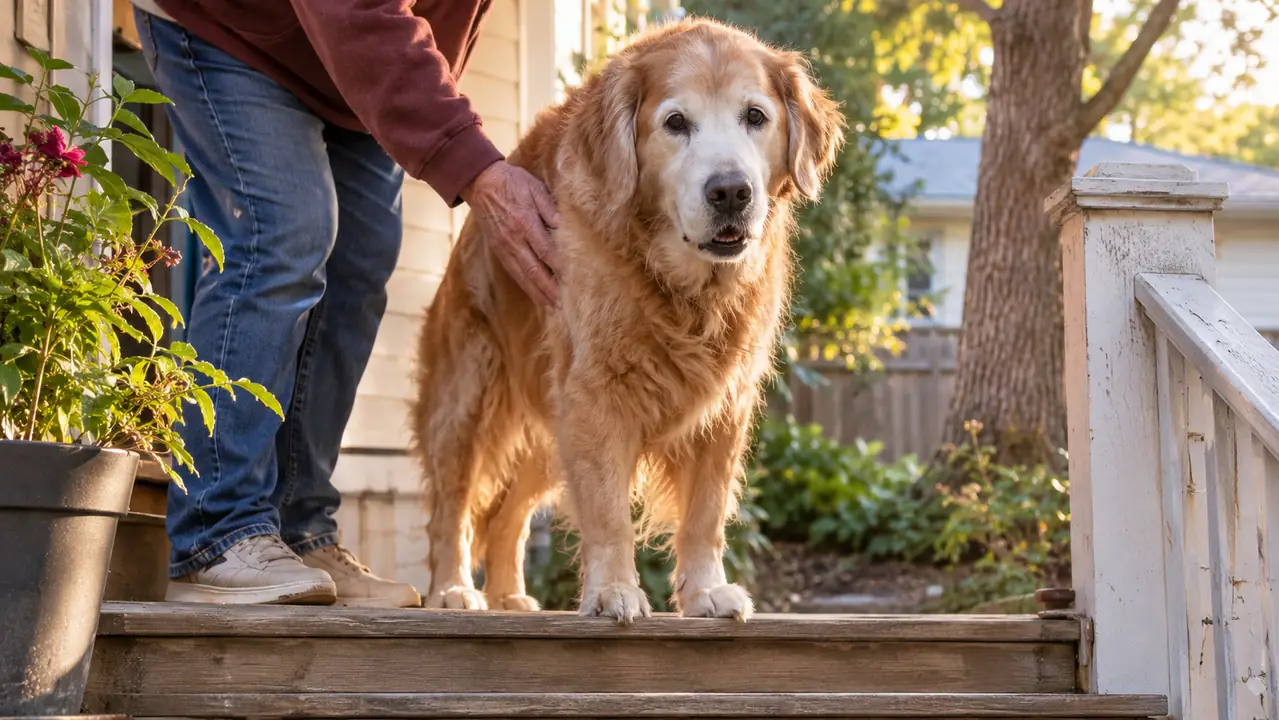
Moose is ten, a yellow Lab, about 82 pounds, and he has early hip arthritis that my vet found at his age-eight checkup. He can still do the two back-porch steps on a good morning. On a bad morning he stands at the top and looks at the steps like they moved. I have used the PICK FOR LIFE lift harness for about ten months for that exact job: taking weight off his back end and keeping him from scrambling on the hardwood and tile inside the house. I have not owned a hind leg sling. I have watched a neighbor use one on an older shepherd mix, read the listings, and asked my vet what each tool is actually for. That is the limit of my experience with a sling, and I will not pretend otherwise.
For Moose, the PICK FOR LIFE harness is the better fit for daily help on steps, slick floors, and controlled standing. A hind leg sling is better for a quick hind-end lift and for a dog who fights straps around the rear. They solve overlapping problems, but they are not the same tool. One is built to keep a dog moving through a house. The other is built to take weight for a short burst. Which one you need depends on which sentence sounds like your dog.
| PICK FOR LIFE Lift Harness | Hind Leg Sling | |
|---|---|---|
| Main job | Lifts and steadies the rear with padded handles and an adjustable strap. | Cradles the hindquarters for a short lift, often to help a dog stand or get outside. |
| Control on steps | You can take weight and guide the dog straight up or down. | Supports weight but can shift side to side, so steering is weaker. |
| Putting it on | Takes a minute to position the straps on a standing dog. | Slides under the belly fast, which helps on a sudden potty trip. |
| Dog acceptance | Some dogs need a few sessions with treats before they relax in it. | Less material on the body, so many dogs accept it faster. |
| Rear leg support | Supports both hind legs together and keeps the rear end from dropping. | Lifts the hindquarters but leaves the legs to hang or step on their own. |
| Fit range | Adjustable length strap listed at 52 to 76, sized for large to extra large dogs. | Fit depends on the maker and the dog's belly measurement. |
| Cleaning | Nylon and machine washable. | Many are spot clean only; check the maker. |
| Listed weight | 14.08 ounces per the listing. | Varies by maker and is often not stated. |
| Stated warranty | 7 days per the listing. | Varies by maker, often none stated. |
| Best use | Daily help on steps, slick floors, and controlled standing. | Quick hind-end lifts and short bathroom trips. |
Where PICK FOR LIFE Wins
I did not arrive at the PICK FOR LIFE harness because I wanted a gadget. I wanted my hand back. Before it, I steadied Moose with a hand under the belly on the porch steps, which worked until it did not. The change came on a Tuesday morning last March, right after a rain, when the back steps were wet and Moose got halfway down and stopped with his back legs bunched under him. I had one hand under a soft belly and nothing to hold. A big dog leans, and your hand is under a soft belly with no handle. He scrambled the last step on his own and stood in the yard shaking, and I stood there feeling like I had gotten lucky. That is the morning I ordered the harness.
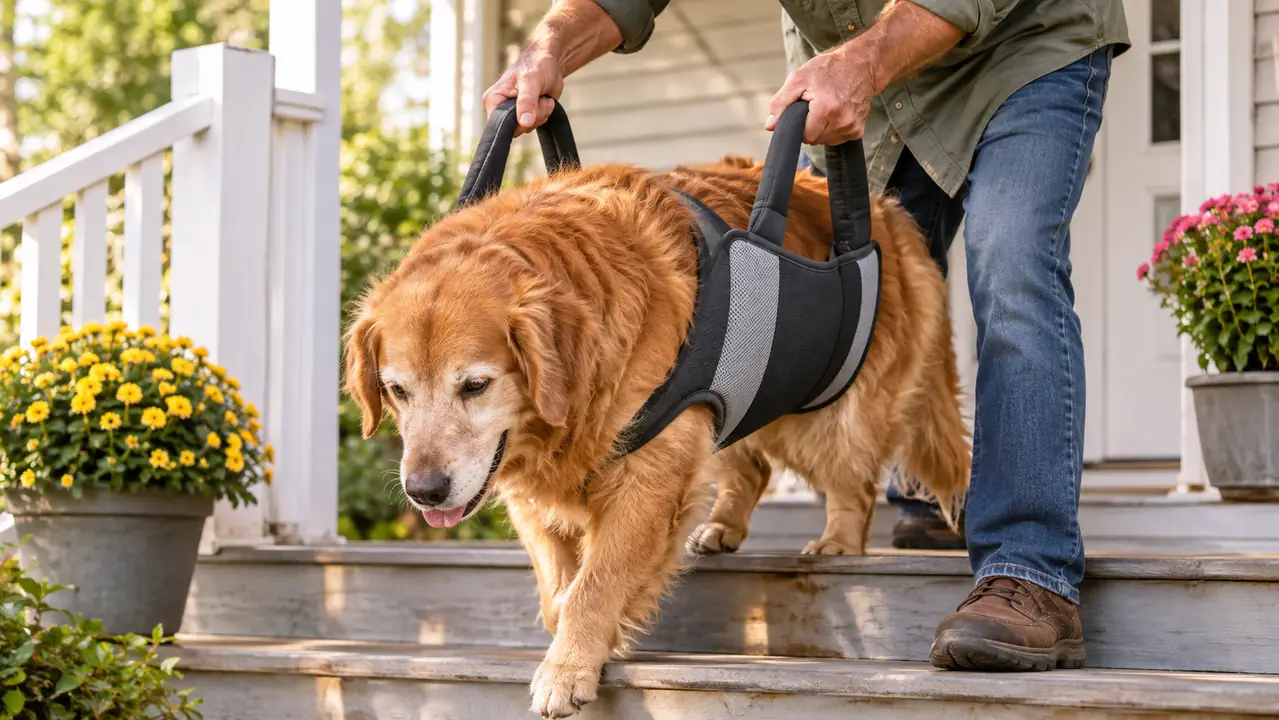
The harness gives me two padded handles and an adjustable strap that goes around the rear. I can take a share of his weight without grabbing his hips or pulling on his collar. On the two porch steps, that is the whole game. He steps, I take weight, he steps again. The first week I used it on flat ground only, out in the driveway, ten minutes at a time, letting him walk while I held the handles loose so he got used to the feel of something on his rear. By the fourth or fifth session he was walking normally with it on. Then we did the steps. The listing calls it a rehab harness for weak rear legs, and that matches how I use it: short, controlled support, not a free pass to overdo it.
Where the harness pulls ahead is control. A sling supports the rear, but it is a single strip of support under the belly. If Moose shifts sideways on a slick tile floor, I have less to hold and less to steer. The harness sits on him with straps, so I can keep him straight and slow him down. The tradeoff is that it takes a minute to put on. On a rushed morning, that minute matters. I still choose it for the steps because I would rather spend the minute than have him scramble. The nylon is machine washable, which matters more than I expected after a muddy week. The listed weight is 14.08 ounces, so it hangs on a hook by the back door without being a production to carry. I have washed it four or five times now on a normal cycle and let it air dry on the porch rail, and the straps have not frayed or stiffened.
There is also the question of fit. This model is sized X-Large and listed for large to extra large dogs, with an adjustable length strap of 52 to 76. That range is useful, but it is not a substitute for measuring your dog. Moose is 82 pounds and broad in the chest, and I still checked the strap and watched him walk before I trusted it on the steps. A loose harness is worse than no harness because it shifts when the dog leans. A tight one rubs. Take five minutes in the driveway before you use it on a stair, and check the strap again after the first week, because the nylon settles a little once it has been worn and washed. The 7-day warranty is short, so that first fit check is not a formality.
Ten months in, the harness is what I reach for on a bad morning, not because it is clever, but because it lets me take weight off Moose's back end without wrestling him.
Where a Hind Leg Sling Wins
I have not owned a hind leg sling. I have watched a neighbor use one on an older shepherd mix, and I have read enough listings to see the appeal. It is one piece, it slides under the belly, and you lift. For a dog who needs a quick assist to stand after a nap or get out to the yard for a bathroom trip, that speed is real. The neighbor I watched had her dog on the back lawn, slid the sling under him in maybe five seconds, and had him up and walking to the fence before I had finished saying hello. With the harness I would still have been getting the straps settled. If your dog panics at straps around the rear, a sling is less material and less fuss. My vet also mentioned that slings are common after surgery for short supported walks, with the owner taught how to use them. That is a different job from daily steps. If Moose ever has a procedure, I would ask the vet what they want me to use rather than assume the harness is the answer.
The sling also wins on acceptance for some dogs. Moose is tolerant, but he is also 82 pounds and opinionated about being handled. A harness with straps can make him plant his feet the first few times. A sling is less to put on, so there is less to argue about. The downside is that it leaves the legs to hang or step on their own. On a step, that can mean the rear end sways. For a quick lift, fine. For a dog who needs to go down two porch steps every morning, I want more steering. A sling is a good tool in a vet's office or for a short bathroom run. It is not the tool I would want as my only help on a slippery hallway.
I also think about the handler. A sling is simple, but simple is not the same as easy when you are 58 and your dog is 82 pounds. You still have to bend, get the strap under the belly, and lift with your legs. The harness lets me stand more upright and take weight through the handles. I am not a big man and my lower back has its own opinions from thirty years of leaning over engine bays, so the difference between bending to a sling and standing with two handles is not a small thing on the fifth trip of the morning. That is not a knock on the sling. It is a fact about my back and my dog's size. If you are stronger than I am, or if your dog is smaller, the sling may feel like less work. For us, the harness is the one that keeps both of us from getting hurt on a wet morning.
If your dog needs steady help on steps, not just a quick lift, start here
The PICK FOR LIFE lift harness is the one I use on Moose for the back-porch steps and slick floors. It has padded handles and an adjustable strap, and it is machine washable. Check the listing for sizing and the current details.
Amazon Check the PICK FOR LIFE harness on Amazon →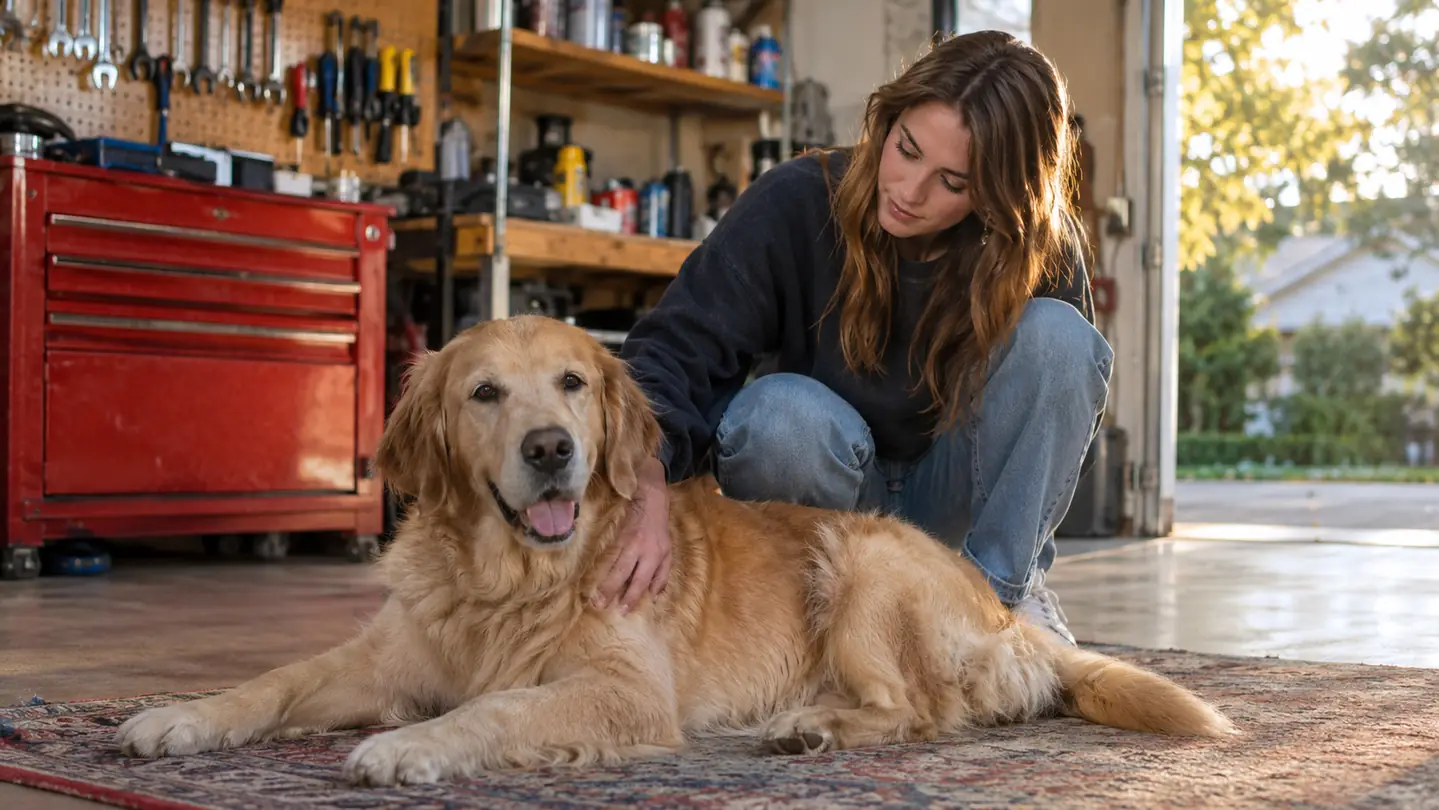
Who Should Buy Which
Buy the PICK FOR LIFE harness if your dog is large to extra large, needs help on steps, slick floors, or controlled standing, and will tolerate straps around the rear. It fits the dog who can still walk but needs his back end steadied. The adjustable length strap is listed at 52 to 76, so measure your dog and check the size chart rather than guessing from the breed. The 7-day warranty is short, so inspect it when it arrives and make sure the fit is right before you use it in the yard. If your dog has a new surgical repair or a skin issue under the straps, ask your vet first.
Buy a hind leg sling if you need a fast lift for bathroom trips, if your dog fights a harness, or if your vet has told you to use a sling for short rehab support. It is less material, faster to slide on, and easier to keep by the door for a sudden need. It is not the better choice for a dog who has to navigate steps twice a day and needs steering. For that, the sling leaves too much to chance. Think about your own dog's worst ten minutes of the day, not his best. If the worst ten minutes involve a stair or a hard floor, the sling is not the tool that fixes them.
For Moose, the split is simple. The harness lives on a hook by the back door. The ramp stays folded in the garage for the F-150, because the harness is not what I use to load him. Before the ramp I lifted him into the truck by hand, and that stopped being safe for either of us somewhere around his ninth birthday. The sling is not in my house because I have not needed that job. If his arthritis changes and the vet wants a sling for a specific reason, I will buy one and use it for that reason. Tools are not loyalty tests. Use the one that matches the job, and ask your vet when the job changes.
One more thing: do not buy either tool and then stop there. The vet told me to keep Moose lean and keep him moving. He is down about four pounds from where he was two years ago, and the vet was happier about that than about anything I have bought. The harness helps him move. It does not replace the walking, the weight control, or the checkups. It is a bridge, not a cure. If your dog is dragging a back leg, knuckling over, or yelping when you lift, that is a vet call, not a shopping decision. I would rather say that plainly than sell you a strap.
If you are between the two, start with the harness only if your dog has a daily job that needs steering, like steps or a slick hallway. If the only job is a lift from the floor to standing, a sling may be enough. That is the test I would use. Not which tool looks better in a photo, but what your dog has to do tomorrow morning before breakfast.
The harness I would buy again for a big dog on steps
Moose is ten, 82 pounds, and still doing his two porch steps with help. The PICK FOR LIFE harness is the tool that made that possible without me lifting his hips by hand. Check the current listing for size and availability.
Amazon Check the PICK FOR LIFE harness on Amazon →