

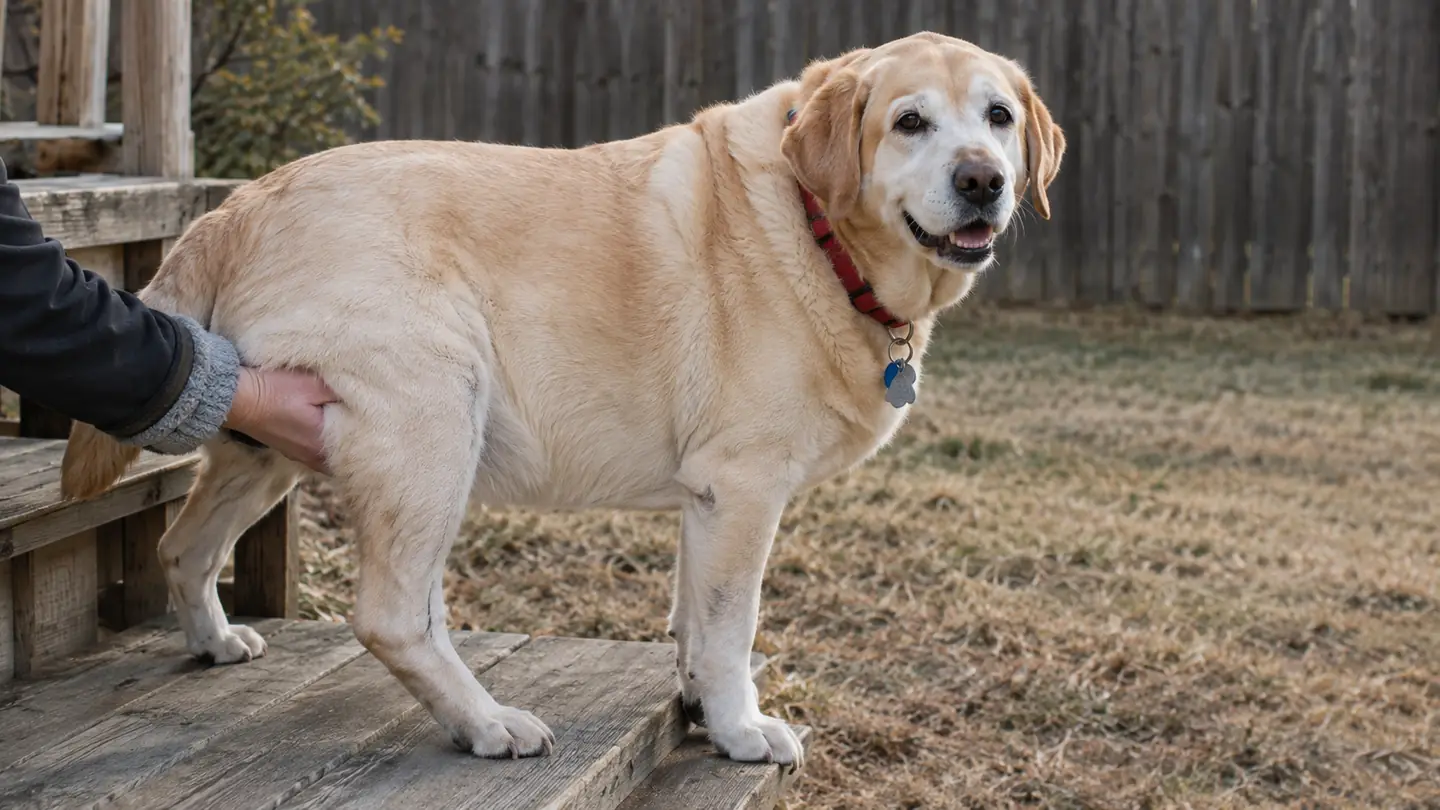
Moose is a ten-year-old yellow Labrador, about eighty-two pounds, and he started getting stiff in the back hips around age eight. Slow to stand after a nap. A pause at the two steps down from the back porch. No more jumping into the truck bed on his own, which he had done without thinking for most of his life. At his age-eight checkup the vet called it early hip arthritis and gave me two instructions: keep him lean, keep him moving. Then she said something I did not expect. She said a joint supplement was worth trying, and the one she named was Cosequin.
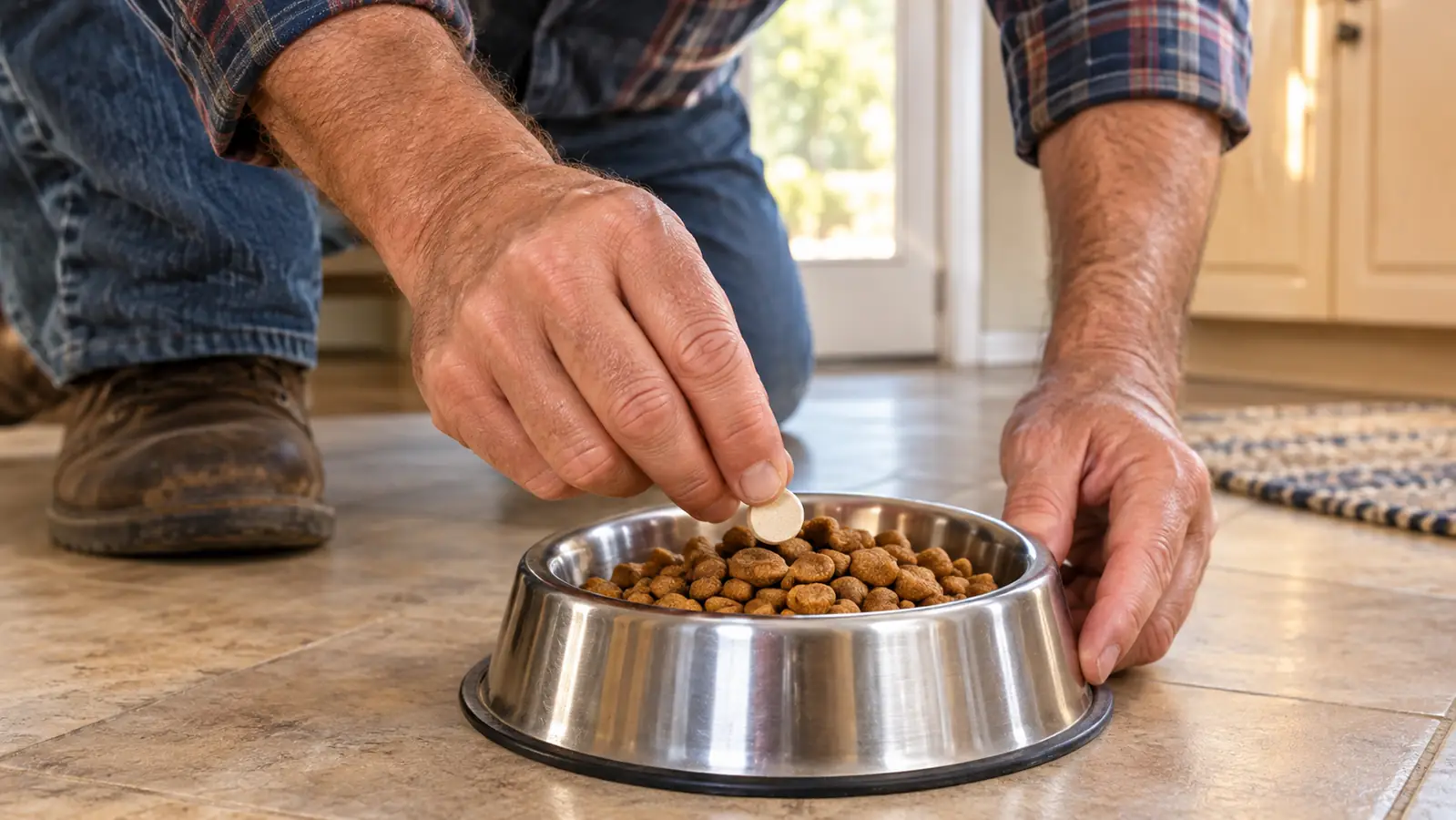
I have been giving him the Nutramax Cosequin chewable tablet daily since then, about two years now. One tablet broken over his breakfast, at the dose the label gives for his weight. I am not a vet and I am not going to pretend a supplement did something it did not do. But I am the guy who fills the bowl every morning, so I can tell you what changed, what did not, and the ten reasons it kept its spot in the routine.
The tablet that has gone into Moose's breakfast for two years
Cosequin chew tabs. Glucosamine and chondroitin in a fixed dose, chicken flavored, so a big dog takes it without a negotiation at the bowl.
Amazon Check Today's Price on Amazon →The four second stand gets shorter
The first change was not in the hips. It was in the clock. Moose used to push up off the floor in one motion. By eight, he rocked forward, paused, then pushed. Somewhere six to eight weeks after he started the Nutramax tablet, that pause got shorter. Not gone. Shorter. I know how that sounds and I am not going to oversell it. But when you live with a dog every day, you notice four seconds turning into two, and you notice it before anyone else does.
It is the ingredient my vet named first
Glucosamine is not exotic and it is not new. It is the thing my vet said without hesitating when I asked about joint support. The Cosequin label lists it as glucosamine hydrochloride at 600 mg per tablet, which is a number I can read and a number I do not have to convert from a scoop. Nutramax has been in pet health for over twenty five years according to the label, and the label also claims the top vet recommended retail joint supplement spot. That is not proof it works on your dog. It is a reason I was willing to spend a season finding out.
Glucosamine and chondroitin arrive in one tablet
The label pairs the glucosamine with sodium chondroitin sulfate at 300 mg. Those two get studied together more often than they get studied apart, and having them in the same tablet means I am not buying two bottles and splitting doses at six in the morning. I spent thirty years reading parts specs before I retired from the shop, and I still read labels at the kitchen table. One bottle, one tablet, one number to remember. That is how a routine survives a busy week.
MSM is in the formula too
The third active ingredient is methylsulfonylmethane, which everybody just calls MSM. I am not going to tell you that is the reason Moose moves better, because I cannot separate one ingredient from another inside a single tablet and neither can you. What I can tell you is that the formula with all three is the one my vet pointed at, and I would rather give the combined version than pick the cheapest single ingredient off the shelf and hope I guessed right.
A chicken flavored chew tab beats a powder fight
It is a chewable tablet and the flavor is chicken. That sounds minor until you have tried to get powder into an eighty-two pound Labrador who has decided he is finished eating. Moose takes his broken over breakfast and does not spit it out. I have hidden pills in peanut butter, cheese, and a slice of hot dog over the years, and every one of those was a negotiation. Not needing to negotiate is worth more than I expected it to be.
Every tablet is the same dose
A tablet is a fixed amount every time. No scoop, no leveling off the top of a measuring cup, no wondering at seven in the morning whether you got it right. When your dog has a real diagnosis and you are trying to change one variable at a time, the fewer things you can get wrong the better. That is not a small reason. Honestly, it is most of the reason the bottle stayed out on the counter instead of going in the cupboard with the other half finished things.
The change is gradual, and that is the honest part
Nobody should expect a different dog in a week, and I did not get one. The shift was slow enough that I spent the first month wondering whether I was imagining it. By month three I had stopped second guessing, partly because a neighbor asked why Moose was getting up easier than he had been. That is the whole result. It is a supplement, not a switch, and the long version of what two years looked like is more than ten items will hold.
It does the one job the gear cannot
The tablet does not help Moose up the two back porch steps and it does not give him grip on the hardwood. That is the lift harness and the socks and the memory foam bed. What the Cosequin does is the daily joint support underneath all of that, so everything else is working with him instead of against him. Nutramax makes one product in this routine, not four. I would not trade the gear for it and I would not trade it for the gear. Ask your vet before you stack anything new on top of what you are already doing.
Trying it is a small change, not a new life
Starting it did not mean changing his food, his walk route, or his schedule. One tablet with breakfast. That is the entire intervention. If your dog is at the front end of a joint diagnosis and you are not sure where to start, a thing you can test without rearranging your week is worth testing. Give it two or three months. If nothing changes, you stop and you have lost very little. I would rather run that experiment than spend another year wondering.
It gives you real notes for the next vet visit
At the next checkup I could tell the vet something useful. When the stiffness was worse. Whether it hit in the mornings or after a long lie down. Whether anything shifted after we started. That beats saying he seems okay, which is what I used to say. A supplement you actually remember to give is a daily data point, and my vet has adjusted Moose's plan twice based on those notes. Neither adjustment was dramatic. Both helped.
What I'd Skip
I would skip any bottle that lists ten ingredients and gives you the amount of none of them. I would skip a powder that makes you guess at the scoop when the dog is eighty pounds and the difference between a right dose and a wrong one actually matters. And I would skip buying anything, including this, before your vet has looked at your dog. A supplement is not a diagnosis. Moose got his from a hands-on exam, not from a label.
The other thing I would skip is expecting the tablet to carry the whole load. My vet's two instructions were keep him lean and keep him moving, and she said those before she said a word about a supplement. Two years in, I think she had the order right. The Cosequin helps. It does not replace the walks, the weight, or the ramp sitting folded in the garage.
Six to eight weeks in, the pause before Moose pushed up off the floor got shorter. Not gone. Shorter. That was the whole result, and I will take it.
If your dog is pausing before he stands, start with the label
Cosequin chew tabs. Glucosamine hydrochloride 600 mg, sodium chondroitin sulfate 300 mg, MSM, chicken flavored, in the 60 count bottle. Two years on the counter in this house.
Amazon Check Today's Price on Amazon →