
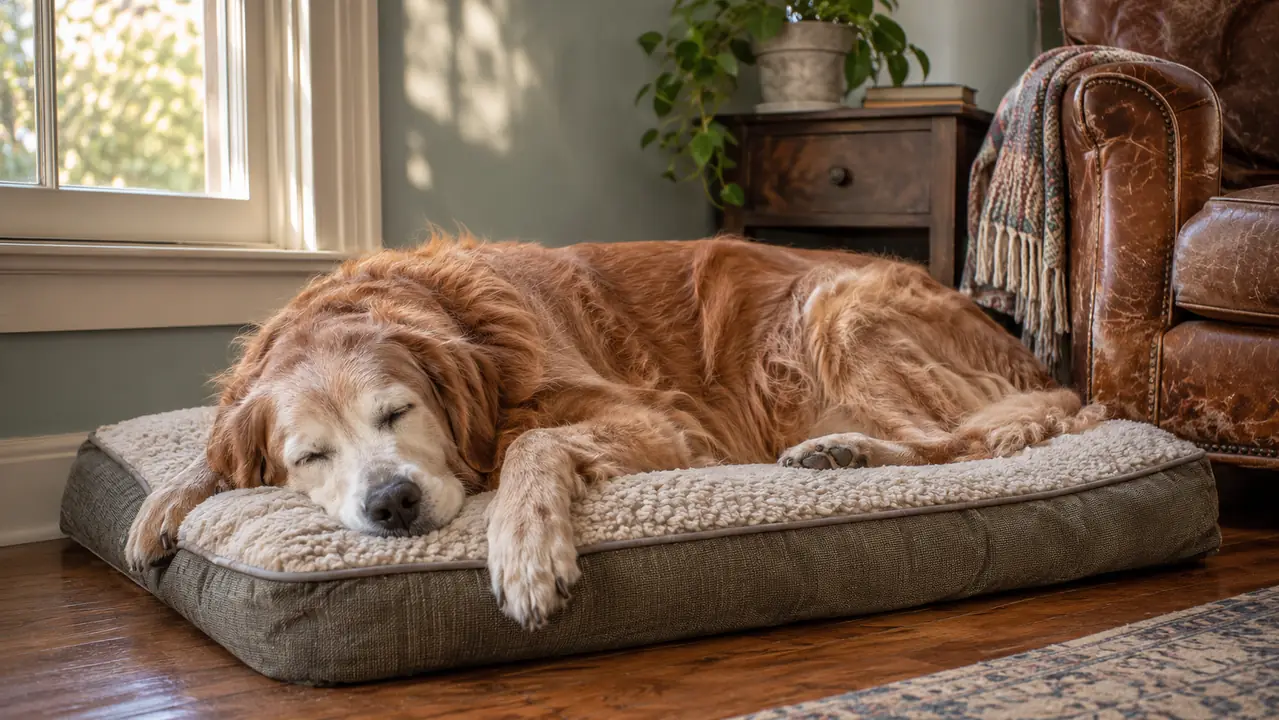
Moose is a 10-year-old yellow Lab, about 82 pounds, and for most of his life he got up off the floor like a dog with somewhere to be. Then around age 8 he started doing this thing where he would rock forward twice before he committed, and the second rock got slower every month. The vet called it early hip arthritis at his age-8 checkup and gave me the same two instructions he gives everybody: keep the weight down, keep him moving. He did not tell me to buy a bed. I bought one anyway. The flat old cushion in the living room corner had been beaten down to about two inches of dead foam, which meant Moose was essentially sleeping on the floor with extra steps.
What I ended up with is the JOYELF Orthopedic Dog Bed in the XLarge size, the rectangular one with the memory foam base and the removable cover. It has been in the house about 14 months now. Long enough that the new-bed smell is gone. Long enough that I have lost track of how many times the cover has been through the wash. Long enough to separate the claims on the listing from the things that turned out to be true in a house with hardwood and tile floors and a dog who weighs 82 pounds. Here is what I found, roughly in the order I found it.
The Quick Verdict
Two years of a stiff back end and 14 months on this bed. Moose gets up in one motion now instead of three. The cover is the weak spot, not the foam.
Amazon Check Today's Price →The Foam Is the Whole Point, and This Foam Has Not Quit
Fourteen months of an 82 pound Lab landing on it every night, and it still comes back. Check the current price and measure your dog before you order, because the XLarge is not as big as the word sounds.
Amazon Check Today's Price on Amazon →How I've Used It
The bed sits in the corner of the living room, on the hardwood, which is where Moose has always gone down for his long naps. Setup took about a minute. The foam core arrives compressed the way these things do and takes a day or so to puff out to its full height, so do not panic on the first afternoon. The listed dimensions are 40.16 by 30.31 by 9.06 inches and it weighs 9.79 pounds, which is a number that means nothing until you set it on the floor and watch a big dog walk a slow circle around it twice before deciding to trust it.
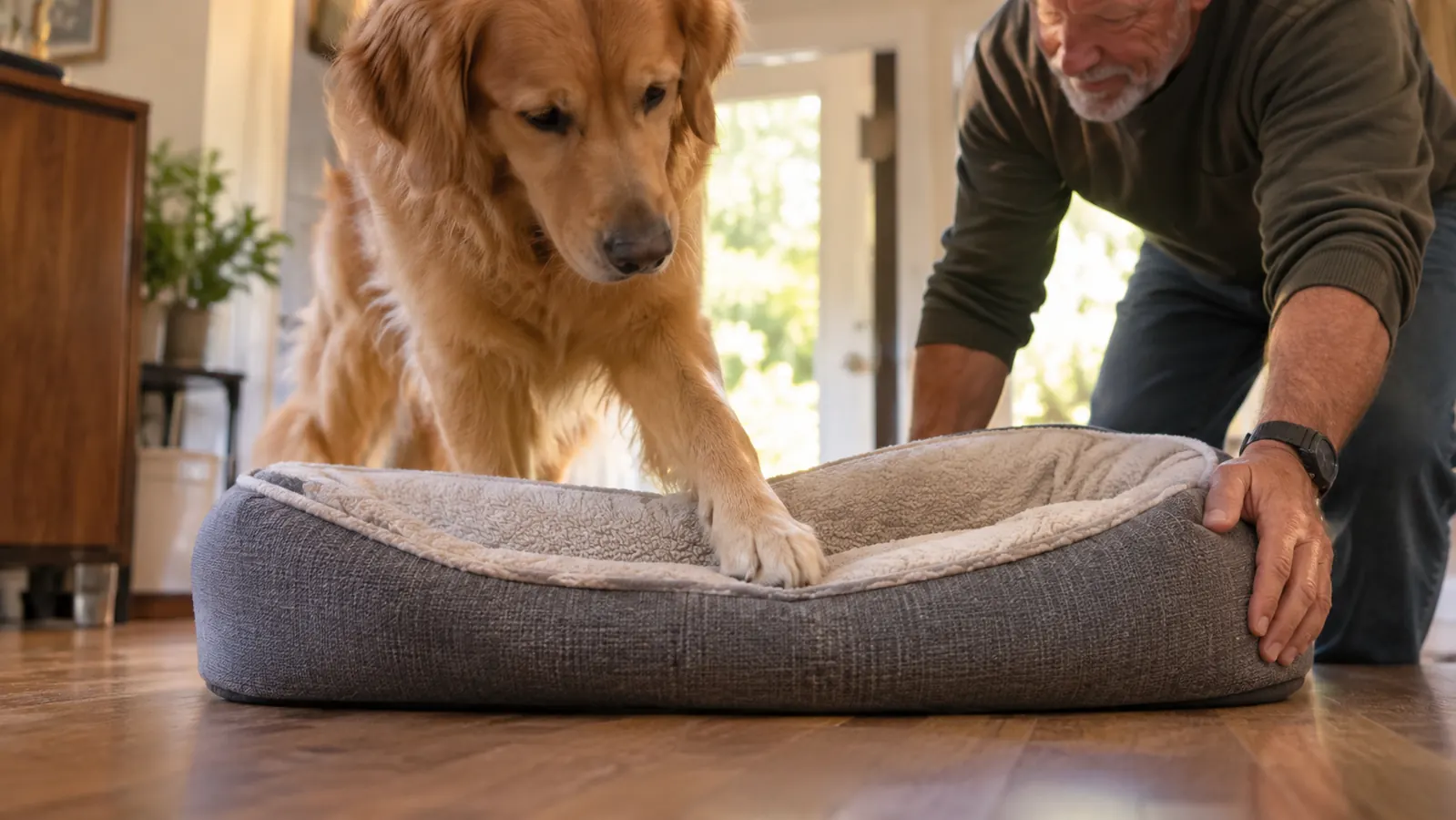
Nine inches of height is the part I did not expect to matter. Moose is not a delicate dog. He is 82 pounds of Labrador with a back end that does not always do what he asks it to, and a bed that sits up off the floor means he does not have to drop the last stretch of the way down. He steps on and he is already partly supported. The first week he still did the two-rock thing. By the third week he was folding down into it in one motion, and that is the single clearest change I can point to and the one I would tell another owner to watch for.
The other thing I did not expect: he uses it more than he used the old cushion. That cushion sat in the same corner for years and he treated it like a formality, something to lie on for twenty minutes before moving to the tile where the sun comes through the window. With this bed he stays put. He will take a two-hour nap on it in the afternoon and then come back to it after dinner. I do not know how a dog decides these things. I only know the corner gets more use than it used to, and that a bed a dog actually chooses is worth more than a bed he tolerates.
What the Memory Foam Base Actually Does
The JOYELF listing calls it a solid memory foam base, and the phrasing matters, because a lot of beds use shredded foam stuffed into a cover and call the result orthopedic. This one is a slab. When I press my hand into the middle of it, the foam gives and then comes back. When Moose stands up, there is a dent where he was and it fills in over the next minute or two. That recovery is the whole trick, and it is the difference between a bed and a blanket on a hard floor. A pancaked cushion stays pancaked and the dog is bearing his weight on the floor through a quarter inch of fabric.
High-density memory foam is the claim on the listing and I cannot test density in my garage, so I will tell you what I can see instead. Fourteen months in, the center of the bed where Moose lands every night has not collapsed. The foam has softened slightly, the way foam does, but the height is still there. The old cushion went flat inside a year and I replaced it without thinking twice because that is what cushions do. This one has already outlasted it and shows no sign of following it. That is the test I actually care about, and it passed.
The listed maximum weight is 100 pounds. Moose at 82 has a reasonable margin and a 130 pound dog does not, so take that number seriously instead of treating it as marketing. The rectangular shape is worth mentioning too. A rectangle sits flush against a wall or into a corner and does not leave a gap for a stiff dog to slide a leg into on the way down. Round beds photograph better. Rectangles fit in houses, and the flame retardant treatment the listing mentions is one of those details I would rather have than not have, though I have no way to verify it from here.
The Cover, the Hair, and the Washing Machine
The cover is removable and machine washable, which is the reason I picked this one over a couple of others I looked at. The way it works is you unzip it, pull the foam core out, zip the empty cover shut so hair does not work its way into the zipper track, and run it. That last part is on the listing and it is good advice. I learned it the hard way with a previous dog bed and a washing machine that smelled like wet dog for a month afterwards.
Hair is the ongoing battle. Moose sheds year round and a fabric cover collects it. The JOYELF listing says the cover makes hair easy to find and remove, and I would call that fair rather than generous. A rubber glove or a damp cloth pulls most of it up in a couple of passes. It is not a five second job. It is a five minute job, and it is a job you will do every week or so if you do not want that corner of the room to look like a dog came apart in it.
The cover also takes most of a day to air dry once it is washed, and that is the part nobody mentions. You are down a bed for an afternoon, so pick a morning when the dog is going to be out in the yard with you anyway. I wash it roughly once a month, more in the wet season when Moose comes in with a muddy belly. The fabric has held through all of it. No split seams, no zipper failure, no shrinking that I can see, and the foam core has survived being dragged out and shoved back in every time.
Fourteen Months In: What Held and What Didn't
The honest summary at 14 months is that the foam held, the cover held, and the thing still looks like a bed rather than a crime scene. Moose is 10 now. He is not going to get better. His back end is stiff in the morning and he hesitates at the two steps off the back porch. What this bed does is narrow the problem to the parts of the day where he is actually moving around. Getting up off the floor is easier. Walking to the door is still the same slow walk it was, and no bed was ever going to change that.
I want to be clear about what this is and is not. It is a place to rest. It is not a treatment. Moose takes Cosequin every morning, one tablet split into his breakfast, and has since that age-8 checkup. That took about six to eight weeks before I noticed easier mornings, and it came on gradually rather than flipping a switch. The bed is a separate piece of the same puzzle. It does not replace the supplement, the harness I use on the porch steps on bad mornings, or the vet's advice to keep him lean and keep him moving.
The pickup is where I notice it most, oddly enough. Moose rides in the back seat of the cab of my 2014 F-150. Before all of this I was lifting him in and out by hand, and he is 82 pounds, and I am 58 with a back that has opinions about that. Getting him off the bed and out to the truck is easier now because he is not coming off a flattened cushion first. Small thing on any given day. It adds up over a week of days.
The Parts I Don't Love
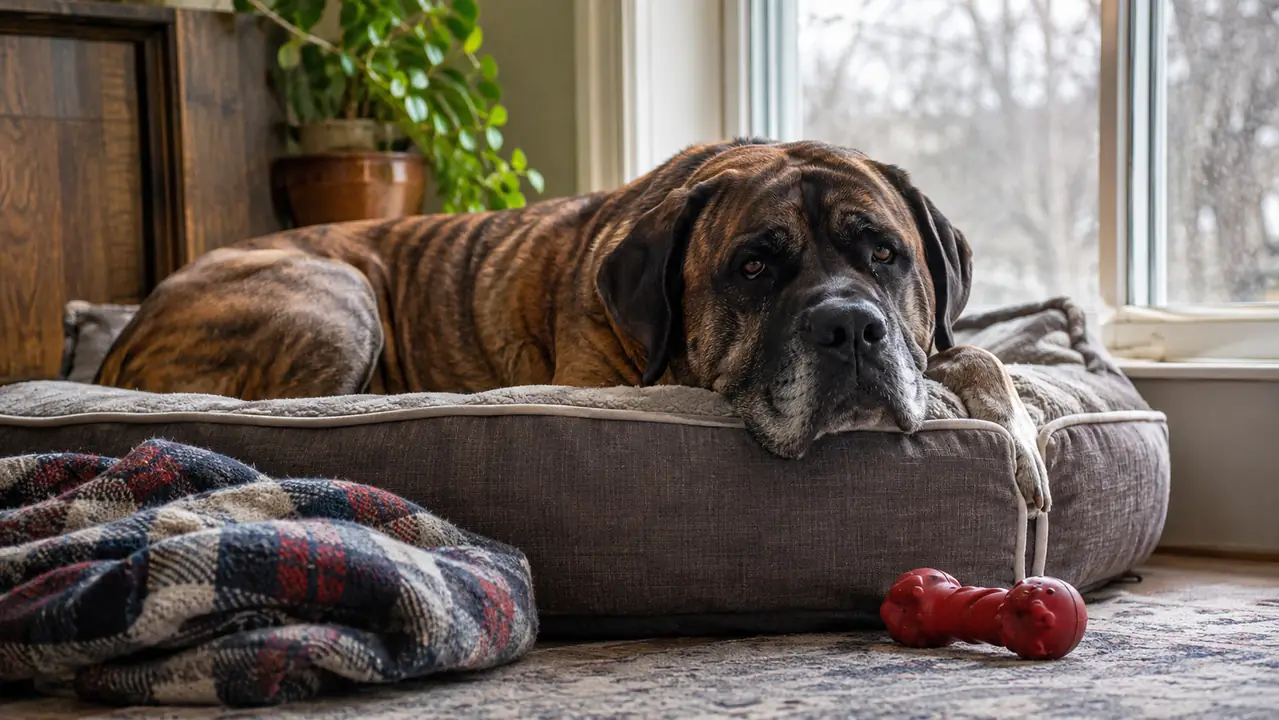
The size naming is my main complaint. XLarge sounds like it should swallow a dog whole. The listed footprint is 40.16 by 30.31 inches, and Moose at 82 pounds fits with room to spare, but a longer dog is going to hang off the end. Measure your dog from chest to the base of the tail before ordering, not just his weight. Two dogs at the same weight can be four inches apart in length and that difference decides which size you need.
Second complaint: the cover is the soft part and it is also the part that wears. The foam is the reason to buy this bed. The cover is the thing you will be fighting with. Between the hair and the drying time it asks for more attention than a bed ought to. If you know yourself well enough to know you will never wash a dog bed cover, buy something with a simpler top, because a covered foam bed that never gets washed turns unpleasant faster than you would think.
I will also say plainly that no bed fixes a slippery floor. Moose still scrambles on the kitchen tile when he turns too fast, and that is a different problem with a different answer. I do not hold it against this product. I mention it because I spent a couple of months quietly expecting the bed to solve more than a bed can solve, and that is not a fair thing to lay on a piece of foam.
What I Liked
- Solid memory foam slab rather than shredded filler, and it has not collapsed in 14 months
- Nine inches of height means less of a drop on the way down for a stiff back end
- Removable cover survives the washing machine with seams and zipper intact
- Rectangular shape sits flush in a corner without leaving gaps
- Maximum weight listed at 100 pounds, so an 82 pound Lab has real margin
Where It Falls Short
- Cover collects hair and takes most of a day to air dry
- XLarge naming oversells the footprint for a long dog
- Foam core is awkward to wrestle in and out when changing the cover
- Does nothing about slick floors or the porch steps
Fourteen months, 82 pounds landing on it every night, and the foam still comes back. That is the whole test, and it passed.
Who This Is For
This is for the owner of a big, heavy dog who has started taking his time getting up off the floor. Somewhere in that 60 to 100 pound range, stiff in the hips, currently sleeping on a cushion that has gone flat and stayed flat. It is also for someone who wants to be able to wash the thing, because a bed you cannot wash is a bed you replace. If your dog is already on joint support, if you have done the vet visit, and if you are working down the list of small physical changes that make a stiff dog's day easier, this belongs on that list. Ask your vet about the arthritis part. Buy the bed for the rest part.
Who Should Skip It
Skip it if your dog is over 100 pounds, because the listing caps it there and I would not push past a stated limit with a dog who cannot tell me his shoulder hurts. Skip it if your dog is a chewer, since this is foam inside fabric and that is a short conversation. Skip it if you want a bed you never have to think about, because the cover wants attention and will keep wanting it. And skip it if you are hoping a bed will replace treatment, exercise, weight management, or a ramp for the truck. It is a bed. It is a good bed. It is not a cure for anything.
If Your Dog Is Doing the Two-Rock Warmup, Start Here
Fourteen months of daily use under an 82 pound senior Lab. Measure your dog nose to tail base first, then check today's price and the size chart.
Amazon Check Today's Price on Amazon →