
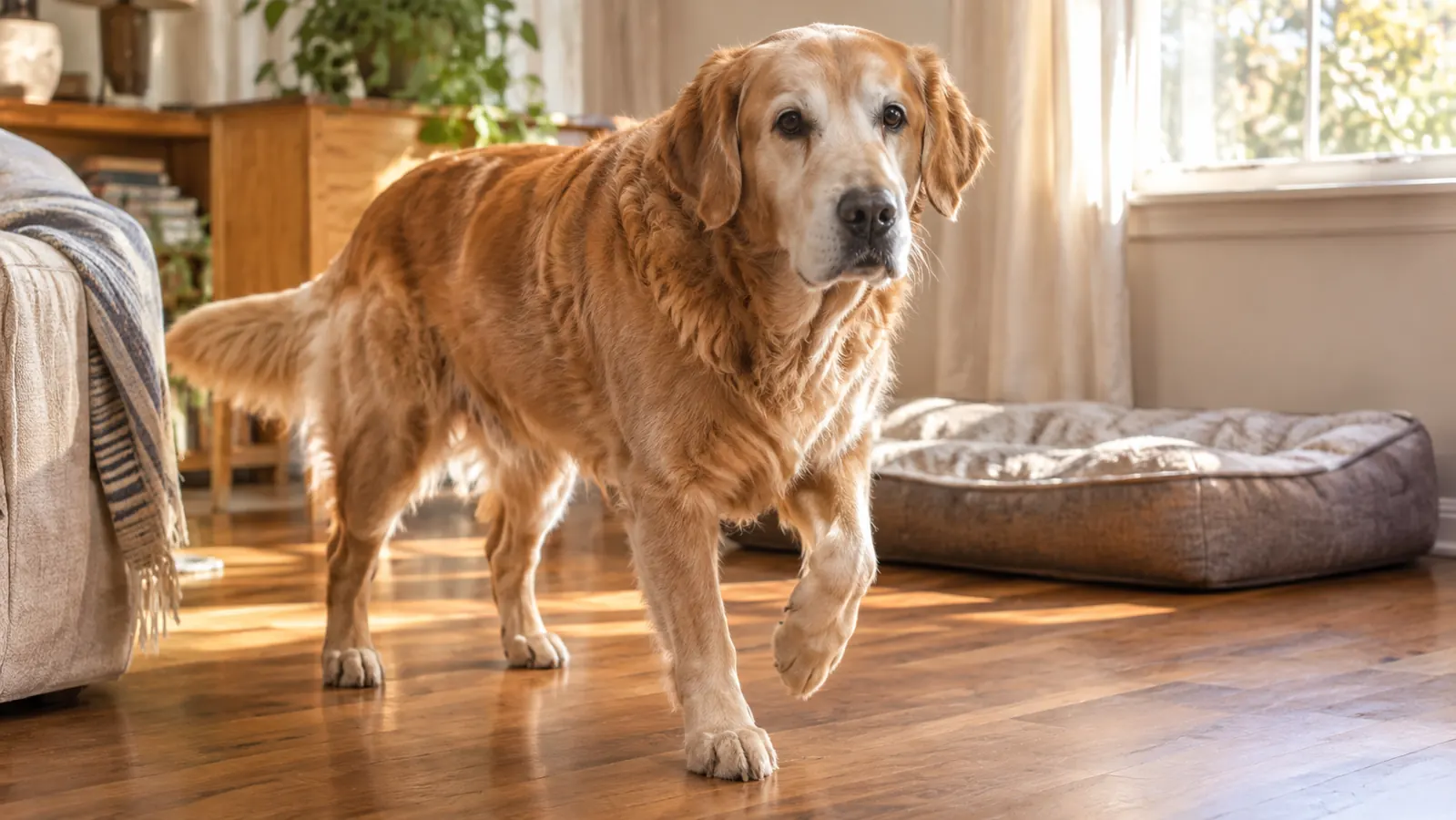
I bought the DOK TigerToes socks for Moose on a Tuesday afternoon, mostly out of irritation. He is a ten-year-old yellow Labrador, about 82 pounds, and his hips have been stiff since his age-eight checkup. The problem was never the standing itself. It was the two seconds after he decided to stand, when his back paws would skate out from under him on the living room hardwood and he would sit back down like the whole idea had been a mistake.
I had already handled the joint side of this the way my vet told me to. Moose gets a joint supplement with breakfast, he sleeps on an orthopedic bed in the living room corner, and I keep him lean. None of that helps him grip a slick floor. That is a separate problem, and the DOK socks are the first thing I have found that goes at it directly. Five months in, here are the ten reasons they have stayed in the rotation.
The floor is the problem, not the dog
Four grip socks with a hook-and-loop strap, sized by paw width instead of body weight. Moose wears his indoors on the hardwood and the tile.
Amazon Check Today's Price on Amazon →The Ten Reasons
His Back Paws Stop Skating Out From Under Him
The first week was not a fix. He still slid, and I still thought about where I stood when I helped him up. Somewhere in the second week it changed, and I noticed because the noise changed. Dog nails on hardwood make a clicking sound right before the paws slide. That sound stopped. He now pushes up, gets his feet under him, and walks. It is a small thing to watch and a large thing to live with, because a dog who cannot trust his own footing eventually stops getting up at all.
The Grip Still Bites When the Sock Twists
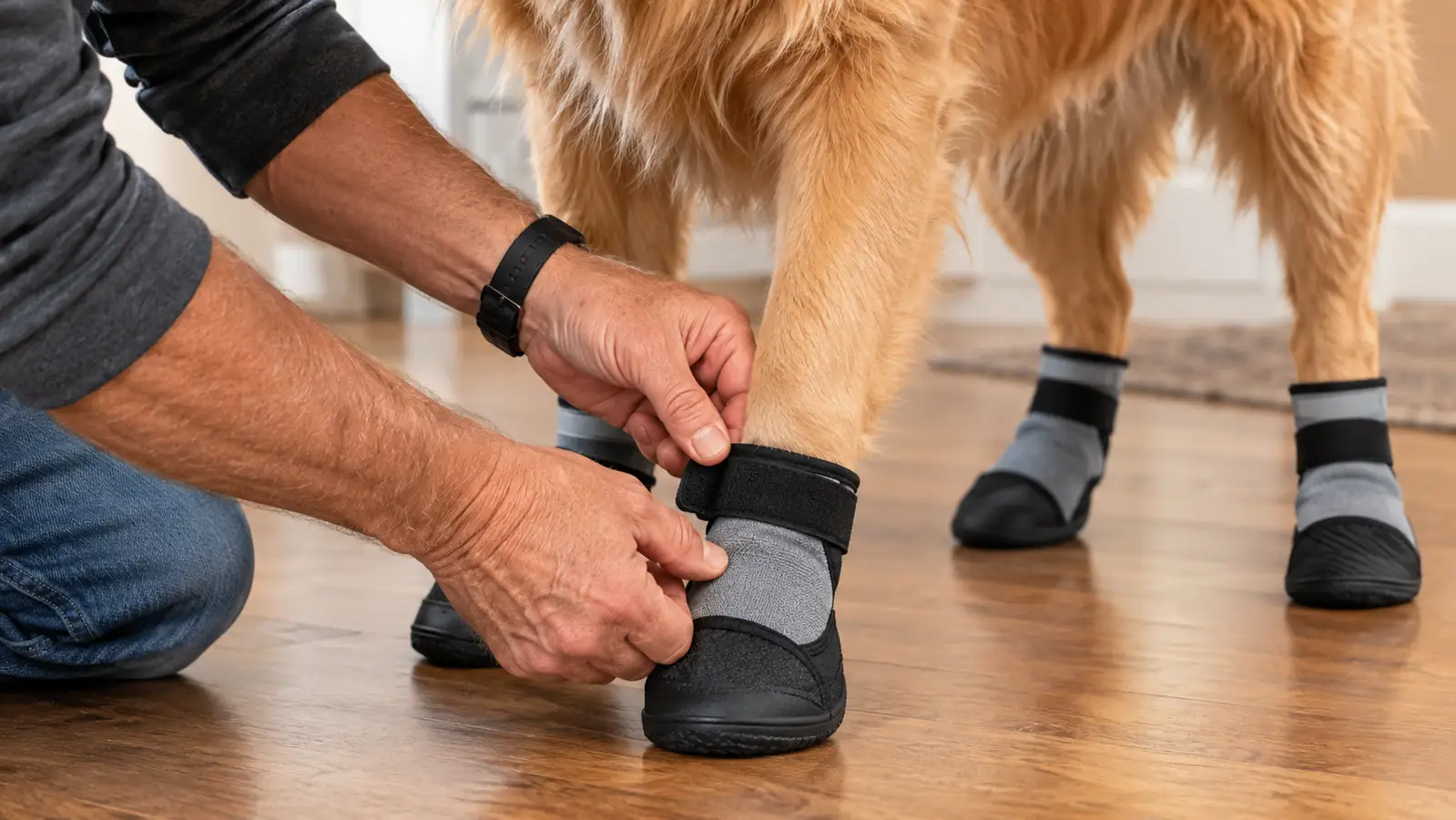
These twist. I want to be straight about that, because a sock rotating on the paw is the main complaint I read before I bought a set. The listing says the grip is engineered to give traction even while the sock is twisted, and from what I have watched on my own floor, that holds up. A twisted sock on a slick floor is still a sock with grip underneath it. What it is not is comfortable for long stretches, so I straighten them when I notice and he carries on.
Four Socks in the Box, Not Two
Most people, me included, assume this is a back-end problem. The back end is what slides, so the back end is what needs help. But a dog with sore hips shifts weight forward, and then the front paws start slipping on turns. The box has four socks in it, so I put all four on. Do that from the first night and you will not spend a week wondering whether the front ones matter. They matter, on turns and on the way down.
One Strap, About Thirty Seconds, No Wrestling
You pull the sock on and close one hook-and-loop strap over the top of the paw. That is the whole procedure. Moose is patient but he is 82 pounds and he does not love his feet handled, so I time things out of self-defense. Four socks takes me somewhere around thirty seconds if he is cooperating and a minute if he is not. Five months of that and the straps have held, no fraying at the edges, no loss of grip on the fabric.
They Go in the Washing Machine
Cotton and nylon, machine washable. I run them in a mesh bag with a load of towels, skip the dryer, and let them air dry over the garage sink. Five months of that and the grip is still there. It has worn in the spots that take the most contact, which stands to reason for anything that lives on a floor under a large dog. Nothing has split at a seam and no strap has come loose. That is the durability test I actually care about.
The Kitchen Tile Stops Being a No-Go Zone
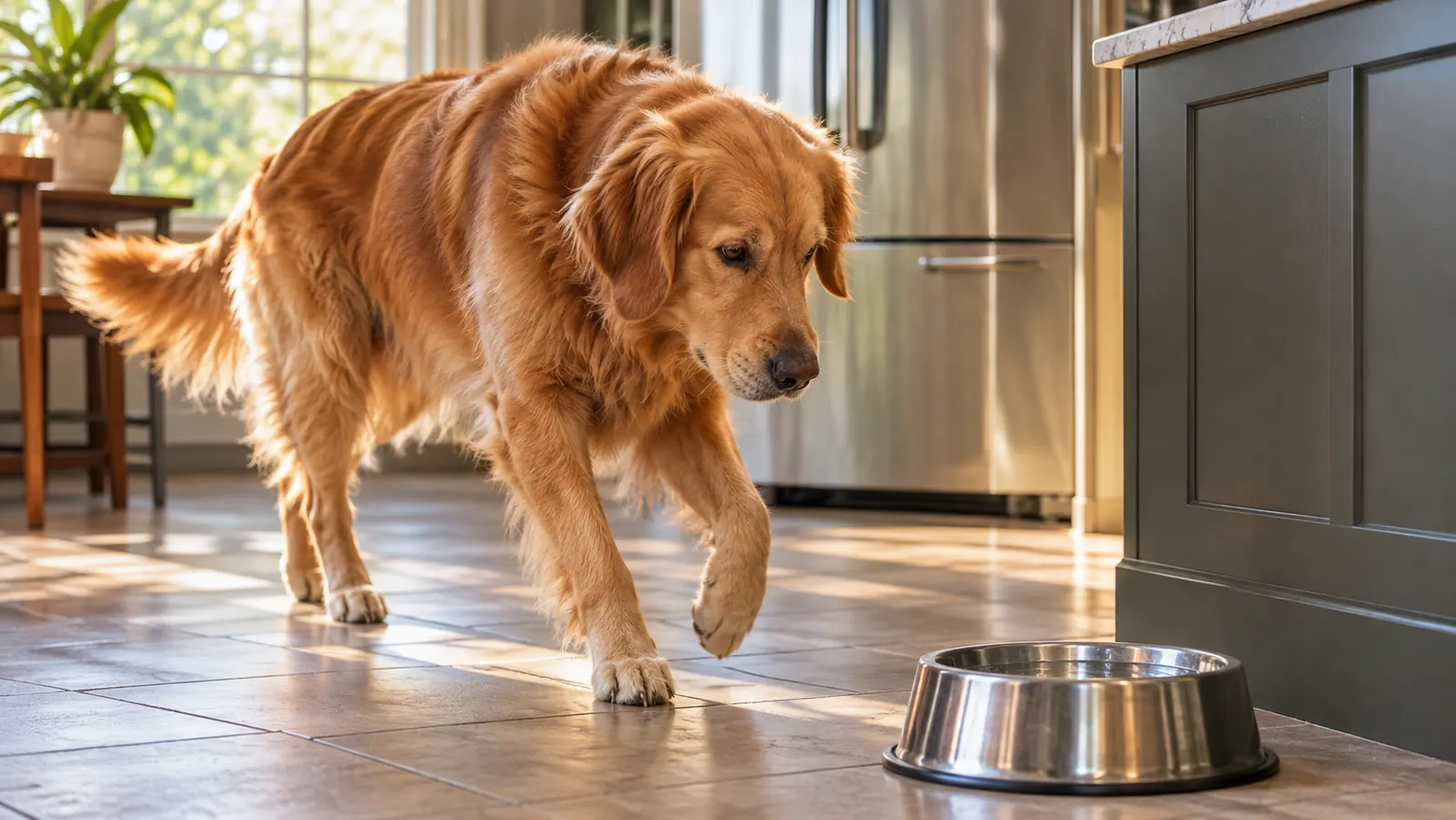
We have hardwood in the living room and tile in the kitchen. Tile is worse, and the kitchen is where the water bowl sits. For a while Moose would stand in the doorway and wait for me to carry the bowl to him, which is a sad thing to watch and a bad habit to encourage. He crosses the tile now. He is not quick on it, but he is deliberate instead of hesitant, and he gets his own drink. That is the DOK socks doing one narrow job well.
Cold Mornings Start Without Two Bad Steps
The floors get cold overnight and a stiff dog feels it. On cold mornings the socks go on before he is fully awake, which means his first trip across the house to the back door is not a series of slips. This is the part I did not expect. It is not that he is warmer in any meaningful sense. It is that he starts the day clean, and a bad step early on is how a stiff dog talks himself out of moving for the rest of it.
The Size Chart Is Measured, Not Guessed
Size Large fits paws between 2.5 and 2.8 inches. That is the number to go by, and it means getting a tape measure across the widest part of the paw while the dog is standing on it. Moose measured near the top of that range and the Large fits with the straps let out a little. Guess by body weight and you will get it wrong, because paw width and dog weight are not the same measurement, especially on a Lab with thick feet.
Amazon Measure the paw, then check the fit chart on Amazon →
They Come Off in Seconds When It Is Time to Go Out
These are an indoor item for us. Socks on for the hardwood and the tile, socks off before the back door opens. Walking a dog on pavement in socks is how you ruin a set in a week, and Moose does not need them on grass. Removal is as quick as install, one strap per paw, and they go in the basket by the door. If a routine takes real effort at ten at night, it stops happening. This one does not take effort.
They Do Not Pretend to Be Medicine
Nothing you put on a dog's foot treats arthritis. The DOK listing is careful about that in a way I appreciate, calling these a senior-dog product rather than a treatment. If Moose's hips get worse, the answer is my vet, not a thicker sock. What the socks do is remove one small daily obstacle so the things that genuinely help, keeping him lean and keeping him moving, are easier to keep doing. That is a modest job and they do it.
Two years of a joint supplement and a better bed, and what changed his evenings was four socks with grip on the bottom.
What I'd Skip
I would skip expecting these to stay put through a whole evening untouched. They twist. On a long lie-down he can work one off a front paw, and I find it by the couch the next morning. That is the honest trade-off of the design, and it is an annoyance rather than a dealbreaker, but if you are the sort of person who will not straighten a sock twice a day, this is not your product. I would also skip sizing down because the Large looks big in the box. Measure the paw and use the chart.
And I would skip buying them instead of seeing your vet about a dog that is limping, dragging a paw, or suddenly unwilling to stand. Socks are for traction on slick floors. They are not for a torn ligament or a neurological problem and no sock on the market fixes either one. Moose's hips were diagnosed at a checkup, we have a plan for them, and the socks are a piece of the house, not a piece of the treatment.
Your floors are not going to change, so change what is on his feet
Moose wears his DOK TigerToes socks indoors on the hardwood and tile, and I pull them off before we go outside. Measure the paw at its widest point first, then pick the size.
Amazon Check Today's Price on Amazon →