
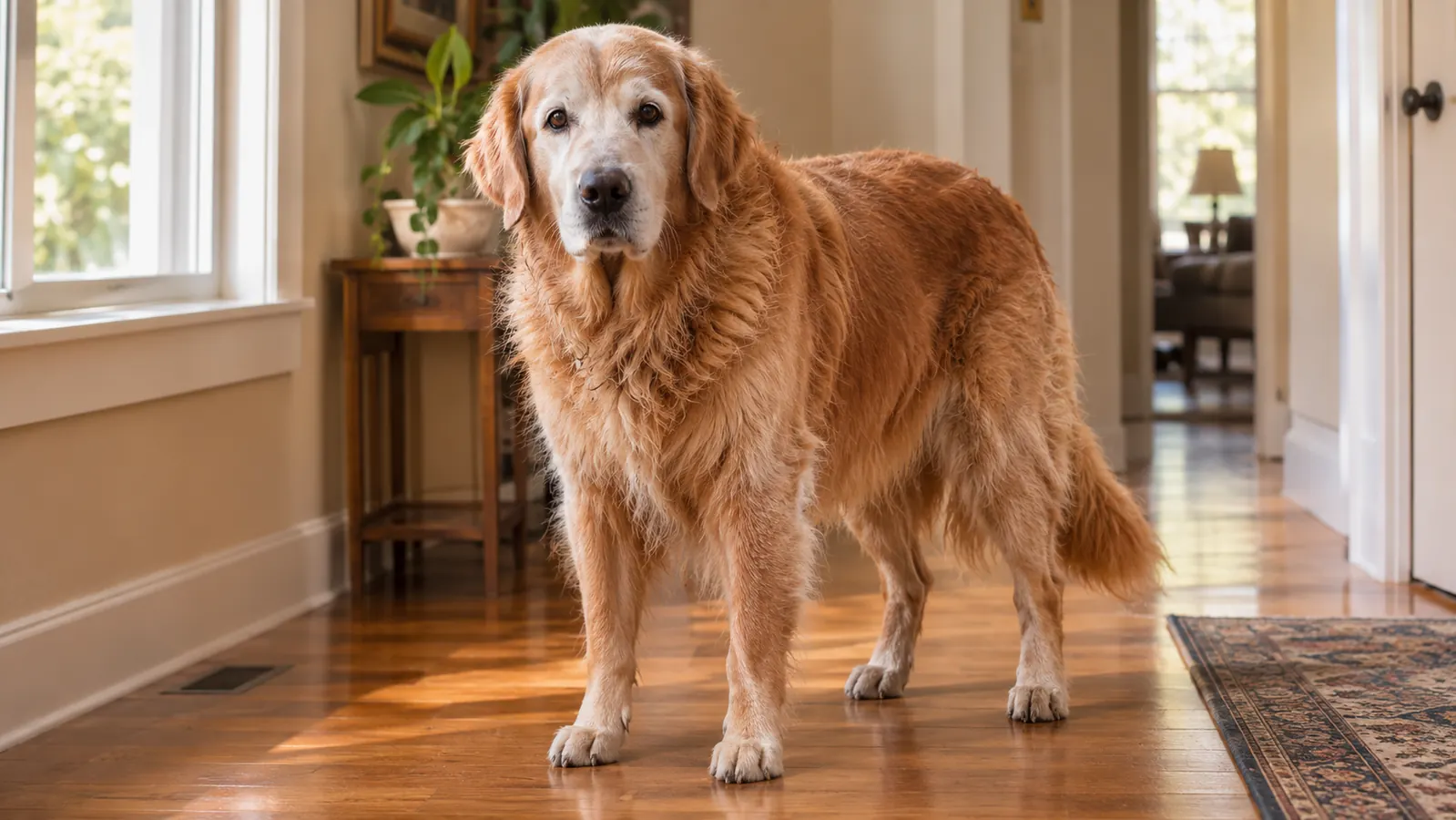
Five months ago Moose crossed the hallway and his back end went out from under him like a shopping cart with a bad caster. Not a fall. A splay. His rear paws slid out wide on the oak, he caught himself on his front legs, and then he stood there looking back at me like I had moved the floor. I had not moved the floor. That is the whole problem with hardwood and a 10-year-old Labrador with stiff hips, and it is why I started looking at dog socks in the first place.
Moose is about 82 pounds. The vet called early hip arthritis at his age-8 checkup, and the advice was simple: keep him lean, keep him moving, and keep him off slick surfaces where he can lose his footing. I put down a couple of runners in the hallway, which helped, but Moose is not a dog who walks in straight lines. He cuts corners. He pivots hard when the mail truck goes past. So I ordered a set of DOK TigerToes Premium Non-Slip Dog Socks in size Large, four to a pack, and he has worn them most evenings and most cold mornings for five months now. This is the honest rundown.
The Quick Verdict
They do the job I bought them for: Moose stops splaying on the oak and tile, and he gets up off the floor on the first push instead of the third. They twist and need re-seating most evenings, and one has gone missing behind the couch. For the traction alone I would order them again.
Amazon Check Today's Price →The hallway stopped being a skating rink by the end of the first week
Size Large is listed for paws measuring 2.5 to 2.8 inches, and the DOK pack comes with four socks. Measure the paw before you order, because the size is the whole ballgame.
Amazon Check Today's Price on Amazon →How I've Used It
The routine matters here, because a review of dog socks is only worth reading if you know what the dog was actually doing in them. Moose wears his indoors only. Evenings on the oak and tile in the house, and cold mornings when the floor is at its slickest. They come off before we go out the back door. There are two steps down from the back porch to the yard, and I am not putting a dog in socks on concrete, gravel, or wet grass.
A word on the floors themselves, since that is what this is really about. The house is oak in the hallway and living room, tile in the kitchen and both bathrooms. The oak is the worst of it, because it has the kind of polished finish a paw gets no purchase on. The tile is not much better when it is cool and dry. Those are the two surfaces he wears them on, and the difference between bare paws and socks on both of them is not subtle.
Five months, so somewhere around 150 wearings, most of them two to four hours at a stretch. He is not a puppy and he is not a chewer, so these socks have not been through what a younger dog would put them through. If your dog destroys fabric, my experience will not tell you much about durability. What it will tell you is fit, traction, and whether a big dog will tolerate four socks on his feet while he tries to nap.
He tolerated them, which surprised me more than anything else in this whole exercise. The first evening he walked like he was stepping on hot asphalt for about ten minutes, then he lay down on his bed and went to sleep with them on. By the third or fourth wearing he stopped noticing. Now he stands in the hallway and waits while I put them on, which I choose to read as him having connected the socks with not sliding.
What These Socks Actually Fix on Hardwood
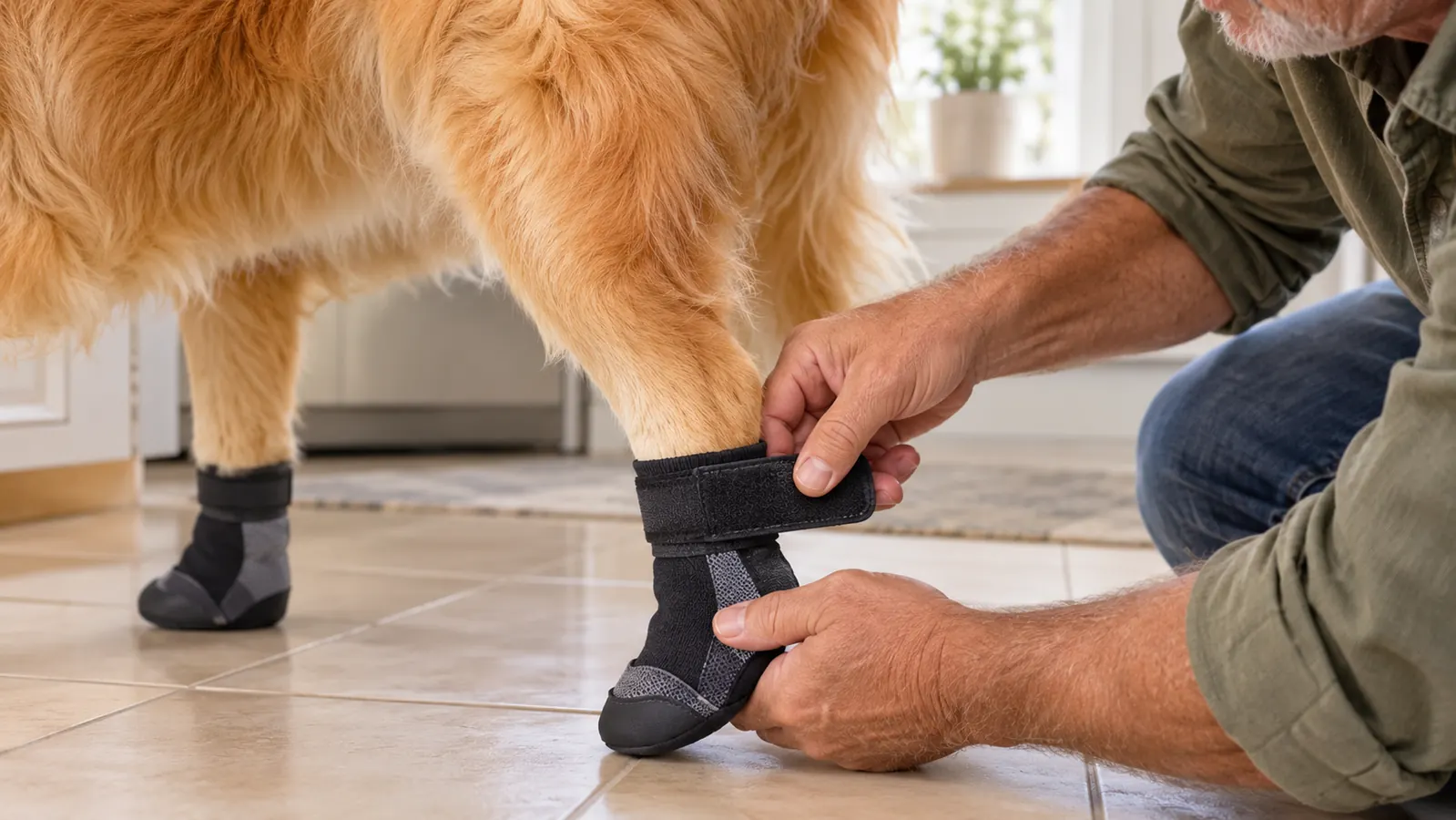
Traction is the entire point, and the listing claims 3x more grip, engineered so the sock still holds if it twists on the paw. I cannot verify a multiplier and I am not going to pretend I can. What I can tell you is that on my oak hallway, a floor about eight years past its last refinish, the difference is obvious from the first wearing. His rear feet stay under him. He turns without the little skid he used to do.
The part I did not expect is getting up. A big dog rising off a slick floor does this rocking thing, forward and back, hunting for grip before he commits his weight. On the tile in the kitchen Moose used to need two or three tries. In the socks he gets up on the first push most of the time, and he does it without that worried look he gets when his back end does not cooperate.
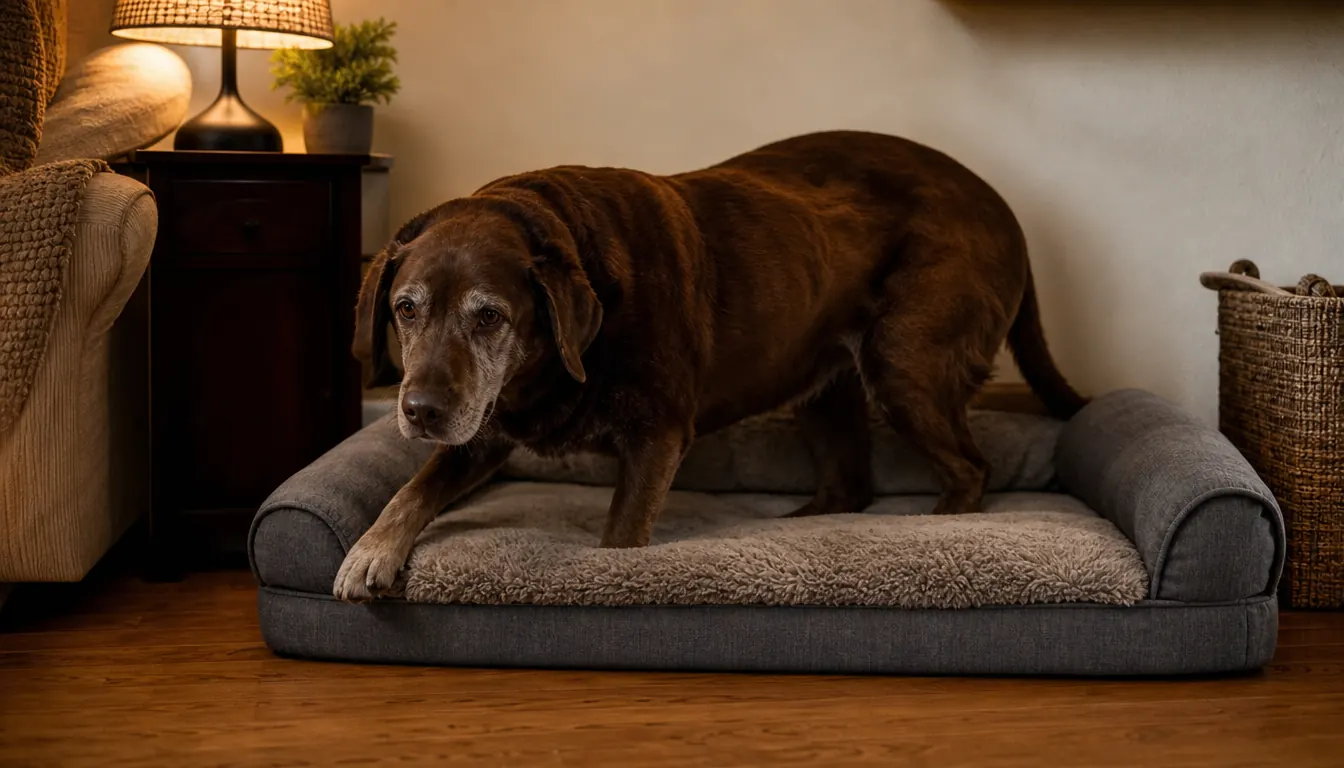
They do not replace anything else in his routine. He still takes his joint supplement with breakfast. He still sleeps on the orthopedic bed in the living room corner. On bad mornings I still use the lift harness for the two porch steps. The socks do one job, which is keeping his feet under him on the floors inside the house, and I would rather have a tool that does one job well than a gadget that claims five.
One side effect nobody mentions: the nails. Moose has thick Lab nails, and on bare paws he sounds like a man typing on an old keyboard when he crosses the hall. In socks the house is quieter. That is not why I bought them and it is not a reason on its own, but it is a small thing I have come to like.
On the tile he used to need two or three tries to get up. In the socks he gets up on the first push most of the time.
The Twist Problem, and Why It Bothers Me Less Than It Should
Here is the honest part. They twist. Not every time and not always the same foot, but over an evening of Moose wandering between the living room and the kitchen, one or two socks will rotate so the grip pad sits off to the side of his paw instead of under it. The back feet are worse than the front. When I notice, I take thirty seconds and straighten them out.
The listing says the grip works even if the sock twists, and I was ready to file that under marketing. It is not entirely. When a sock has rotated maybe a quarter turn, Moose still walks fine on the pad that is left in contact with the floor. It is when one works around until almost none of the pad is down that you get the slide back. So the claim is roughly true, and it is also not a licence to skip checking the fit.
One sock came off once, on the cold tile, when he did a hard shake after coming in from the yard. I found it under the table. It has not happened again, but I check all four before he walks anywhere, and I would tell you to do the same with a dog who shakes off or turns hard.
Sizing a Big Paw and Getting Four Socks On
Size Large is listed for paws measuring 2.5 to 2.8 inches. I measured Moose's front paw across the widest part while he was standing, which took two tries because he thought the tape measure was a treat, and it came out around 2.7. That put him near the middle of the Large range on the DOK sizing and the fit has been right. Measure the paw while the dog is standing, and measure across, not up the leg.
The closure is a hook and loop strap on a pull-on sock. You slide the sock on and snug the strap above the paw. That strap is what keeps them from coming off, and it is also the thing you have to get right. Too loose and the sock slides down the leg. Too tight and you will see it dig in. I can feel when it is right now, but in the first week I had one too tight and Moose told me by lifting that foot and shaking it until I fixed it.
Four socks in the pack, which is the practical number. Two on the back where he needs them most, two on the front for balance, and no spares. If you have a dog who loses things under the couch or in the yard, order knowing there is no fifth sock in the box.
Five Months In: Wear, Washing, and Honest Condition
The material is cotton and nylon and the care instructions say machine wash, so they go in with a load of towels every couple of weeks and I air dry them on the garage bench. After five months of that, the grip pads still do their job, though they have gone from a sharp texture to something smoother. The straps still hold. The seams at the toe have not opened. Nothing has worn through.
I have washed them maybe a dozen times now. No shrinkage that I can see, no loose threads, and no strap that has lost its bite. The only real change is in the pads, which have softened from the texture they had out of the pack.
Even so, this is a consumable. The socks are a quarter inch thick and the set weighs 3.53 ounces, and they are being dragged across oak and tile several times a week by an 82 pound dog. I expect to buy another set at some point and I do not think that is a knock on the product. It is what a fabric item worn on a moving animal does.
Teeth are the other thing. If your dog decides these are a chew toy, they will not last long. Moose is 10 and well past that stage, so I have no complaints, but I would not hand a set to a dog who already eats socks out of the laundry basket and expect good news.
Where the Socks Stop Helping
The two steps down from the back porch to the yard is where these come off. Socks are an indoor tool. On concrete, gravel, or wet grass they will pick up grit, soak through, and wear fast, and there is no traction benefit on those surfaces anyway. I take them off at the door every single time and they go in a basket by the mat.
They also do not stop the arthritis. Moose is still stiff in the hips in the morning. He still hesitates at those two porch steps until I put a hand under him or reach for the harness. The socks remove one hazard, which is the floor, and I want to be straight about that, because it is easy to read a review like this and expect a bigger change than a piece of fabric can deliver.
What I Liked
- Moose stopped splaying in the oak hallway within the first few wearings
- He gets up off tile and hardwood on the first push instead of the third
- Size Large fit a front paw measuring about 2.7 inches on an 82 lb Lab
- Grip still bites when a sock has rotated about a quarter turn
- Machine washable cotton and nylon, still intact after a dozen washes
Where It Falls Short
- They twist on the back feet and need straightening most evenings
- One came off during a hard shake on the kitchen tile
- The hook and loop strap has to be snugged right or the sock slides down
- Only four socks in the pack, so there is no spare
- Not for a dog who chews fabric
Who This Is For
If you have a big older dog and a house full of slick floors, this is a straightforward fix and I would start here. Moose is 82 pounds with early hip arthritis and a habit of turning hard when something outside gets his attention. He needed traction indoors, not a lift and not a ramp, and the socks give him exactly that for a couple of hours at a time. I would also point you here if your dog struggles to get up off hardwood and you have already sorted the resting spot and the daily joint support. Ask your vet first, the same way I did, because slipping is one problem and a dog who is unsteady for other reasons is a different conversation.
Who Should Skip It
Skip these if your dog lives mostly outdoors or your floors are carpet, because then you are solving a problem you do not have. Skip them if you want something you set once in the morning and forget, since these need checking and re-seating through the evening. Skip them for a fabric chewer. And if your dog cannot stand without help, socks are not the tool. That is a lift harness and a vet appointment, and I would not want anyone to read this and think four socks are a substitute for either.
Five months on the oak floor, and I would order the same size again
Measure the paw while the dog is standing. DOK size Large covers 2.5 to 2.8 inches and you get four socks to a pack, so check the fit before the first walk down the hall.
Amazon Check Today's Price on Amazon →