
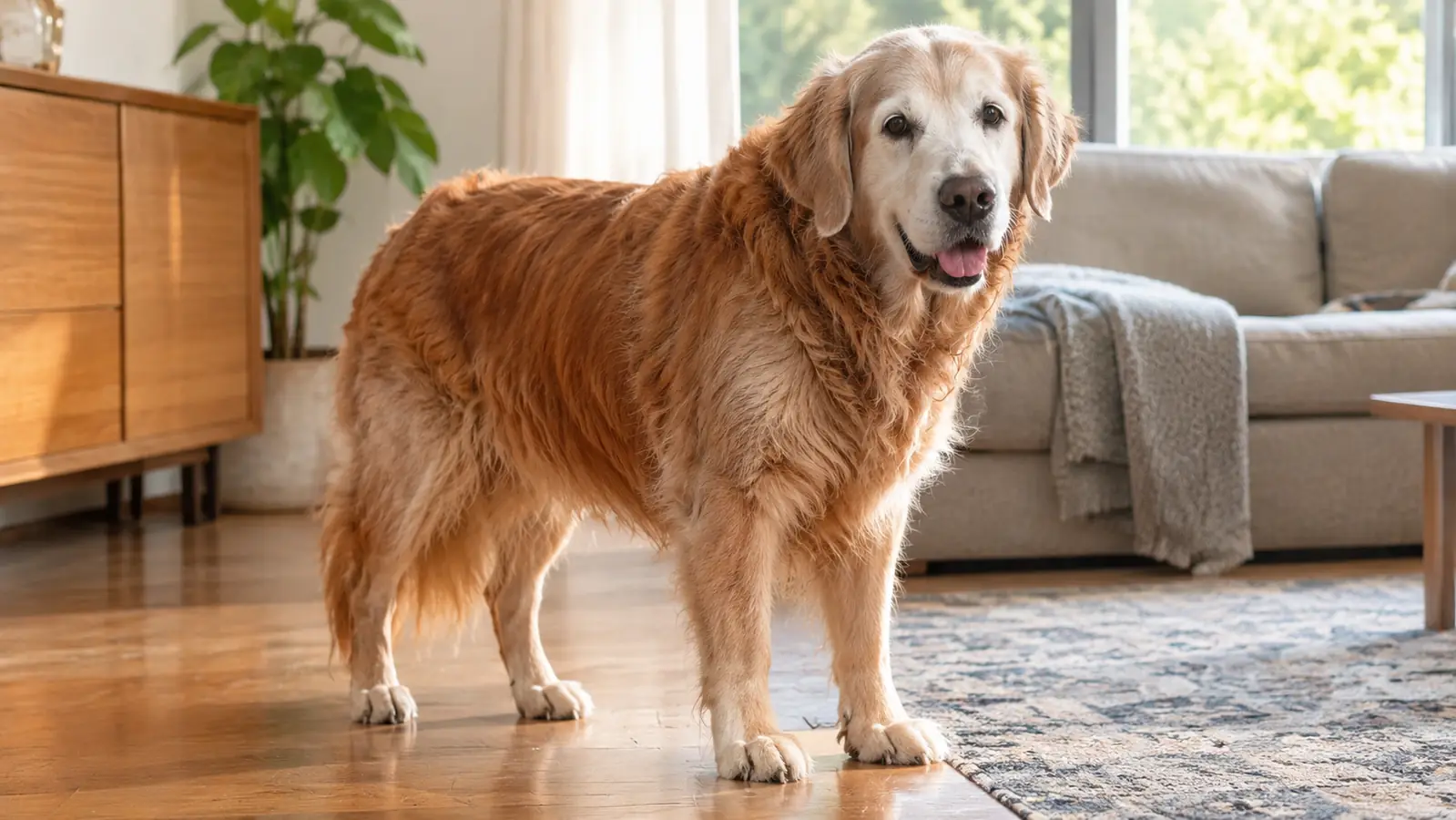
Hardwood looks good until you watch an old dog try to cross it. Moose is my 10-year-old yellow Labrador, about 82 pounds, and he has early hip arthritis that the vet found at his age-8 checkup. On bare hardwood he walks like the floor is tilting. His back feet slide out, he catches himself, and then he stands there deciding whether the trip to his water bowl is worth the effort. I moved a rug. I kept his nails trimmed. I stopped throwing his ball down the hallway. None of it fixed the slick stretch between the kitchen and the living room. The thing that gave him steadier footing indoors was a set of DOK TigerToes non-slip dog socks. This is the process I use, five months in.
Socks are not a cure for arthritis. They do not rebuild a hip or make a stiff dog young. They are a floor tool. The DOK socks give Moose's paws something to grip on the hardwood and tile, and that is the job I judge them on. They also come off. They twist. One will go missing under the couch. If you want a set-and-forget product, you will be annoyed. If you want fewer scrambles on a slick floor while you follow your vet's advice about weight and movement, they are worth learning to use properly.
Give the old dog a grip before the next slide
The DOK TigerToes socks are what Moose wears on the hardwood at night. Start with the size guide, then introduce them one paw at a time.
Amazon See the DOK TigerToes on Amazon →Step 1: Measure the paw, not the dog
Size is the first place these go wrong. The DOK TigerToes in Large are made for paws 2.5 to 2.8 inches across. That is not the same as large dog. Moose is 82 pounds and wears the Large, but a lean 70-pound dog with wide feet can need the same size while a taller dog with narrow feet may not. Measure the widest part of the paw while the dog is standing with weight on it. If you measure a lying dog, the paw spreads differently and you will order wrong. The package includes four socks, one for each paw. I use all four indoors because Moose is unsteady behind and in front when he turns on the kitchen tile.
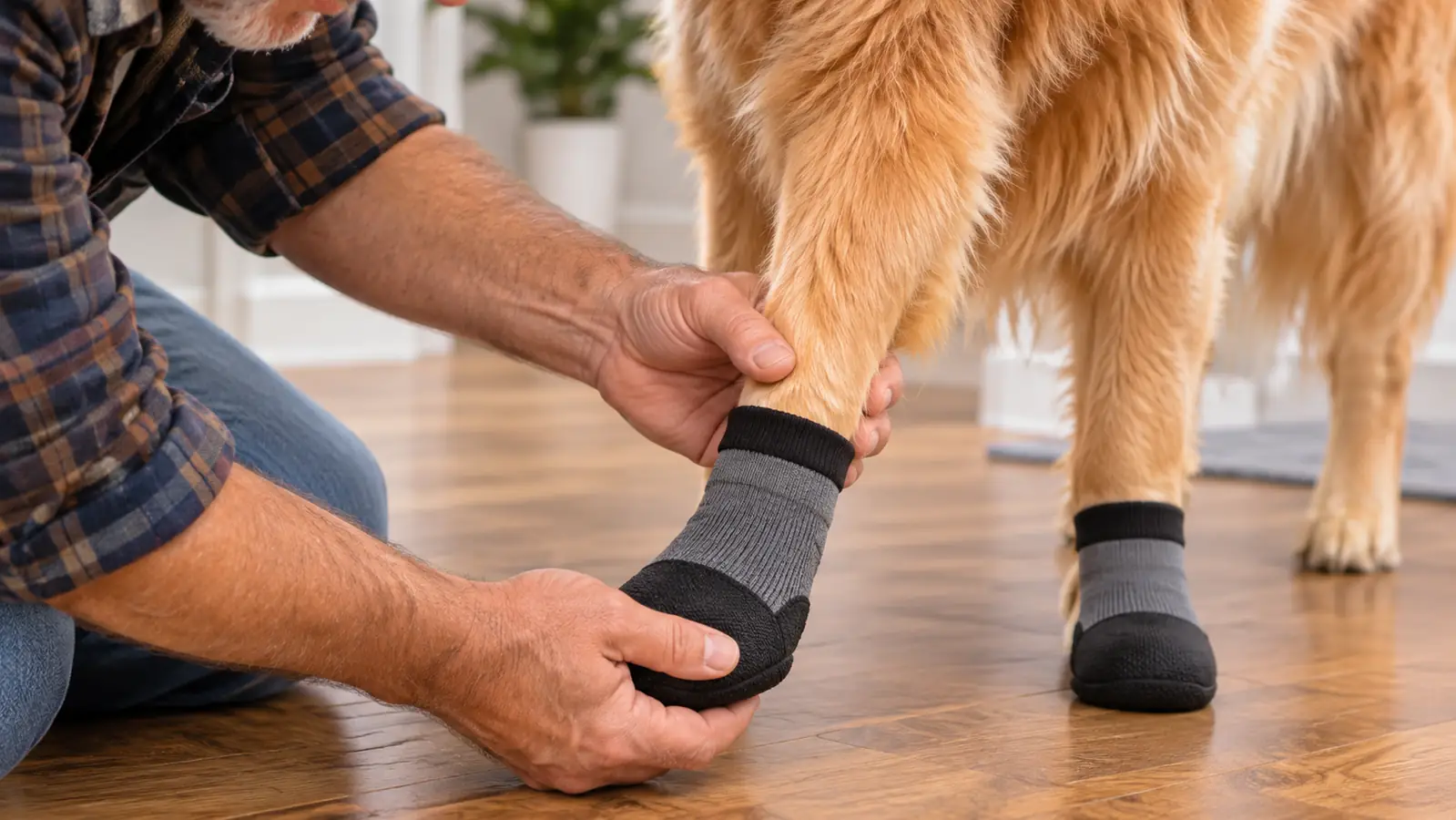
Fit matters more than grip on a sock that will not stay on. The closure is hook-and-loop with a pull-on style, and it needs to sit snug without pinching. You should be able to slide one finger under the top edge, not two. If the sock bunches at the toe or the grip section rides up the side of the paw, stop and reset it. A twisted sock is not a failed product, it is a sock that needs a second try. DOK builds the grip to still give traction if the sock twists, but you should still fix the twist when you see it.
If you are between sizes, do not size up to leave room. A loose sock will twist and slide. A snug sock that you can still fit one finger under is the better starting point. Check the paw after ten minutes the first few times. Red marks mean too tight or a twist you missed.
Step 2: Introduce the socks slowly
Do not put four socks on a stiff 10-year-old dog and expect him to walk across the house like nothing happened. The first time I put one sock on Moose, he lifted that paw and held it in the air like I had glued a rock to it. That is normal. Dogs are sensitive about their feet, and a sock changes how the floor feels. Start with one sock on a front paw, in a small room with a rug, and let the dog stand for a few seconds. Treat. Take it off. Do that once or twice a day.
After a few days, add a second sock. Keep sessions short and boring. No hallway parades. No stairs. I sat on the kitchen floor with Moose and fed him a piece of his regular kibble for standing still. When he took a step without the foot-lift routine, I added the back socks. It took him about a week to stop walking like he was wearing swim fins. The point is not to win an obedience contest. The point is to get the socks on without a wrestling match every evening.
If your dog snaps or panics, back up. Socks are not worth a bite or a bad association. Some dogs will never tolerate them, and that is a real answer. Ask your vet about other options if the dog is painful or fights the socks. For Moose, slow was the difference between socks he tolerates and socks he would not let near him.
Step 3: Put them on straight and snug
Put the socks on when the dog is standing on a non-slip surface, not at the top of the stairs. I do it on the rug by the front door. Slide the sock on with the grip section under the paw, not on top. Pull it up so the top sits below the wrist or hock, then fasten the hook-and-loop closure. Check each one by running a finger around the inside. If the sock is twisted, take it off and start again. A sock that is on crooked will slide off faster and annoy the dog.
Front paws first, then back. Moose is more stable in front, and doing the back last means he is not standing on three socked feet while I fumble with the fourth. If he is having a bad morning, I put on the back socks only. The back end is where he slips when he turns on the hardwood. On a better day, all four go on. There is no rule that says every dog needs four at once. Use the paws that need help and keep the rest bare if that is what the dog accepts.
Check the closure after the first few steps. Hook-and-loop can loosen if it is not pressed flat, and a loose sock will turn under the paw. I keep a spare pair in the closet so I am not hunting for one sock while Moose waits on a slick floor. DOK sells them as a set of four, so a lost sock means a mismatched set, not a quick single replacement. That is one of the small annoyances.
Step 4: Match the socks to the slick floor and the daily routine
The socks only help if they are on when the dog is on the slick floor. In our house, that means evenings and cold mornings. The hardwood is cold, Moose is stiffer then, and the tile in the kitchen is worse than the wood. I put the socks on after his last trip outside and leave them on while he settles in the living room. I take them off for outdoor walks. They are not boots. Wet grass, mud and gravel will pack into the grip and the fabric, and the listing says indoor and outdoor protection, but I still keep them for the house.
I also fixed the floor, not just the dog. A runner from the kitchen sink to the back door. A mat where he turns around in the hallway. The socks buy time on bare wood, but a rug at the two worst turns means he has less bare floor to cross. That is not a product failure. It is the same rule I use in the garage: fix the slick spot and the tool has less to do. If you have a long stretch of hardwood and no rug, start with the path the dog uses most.
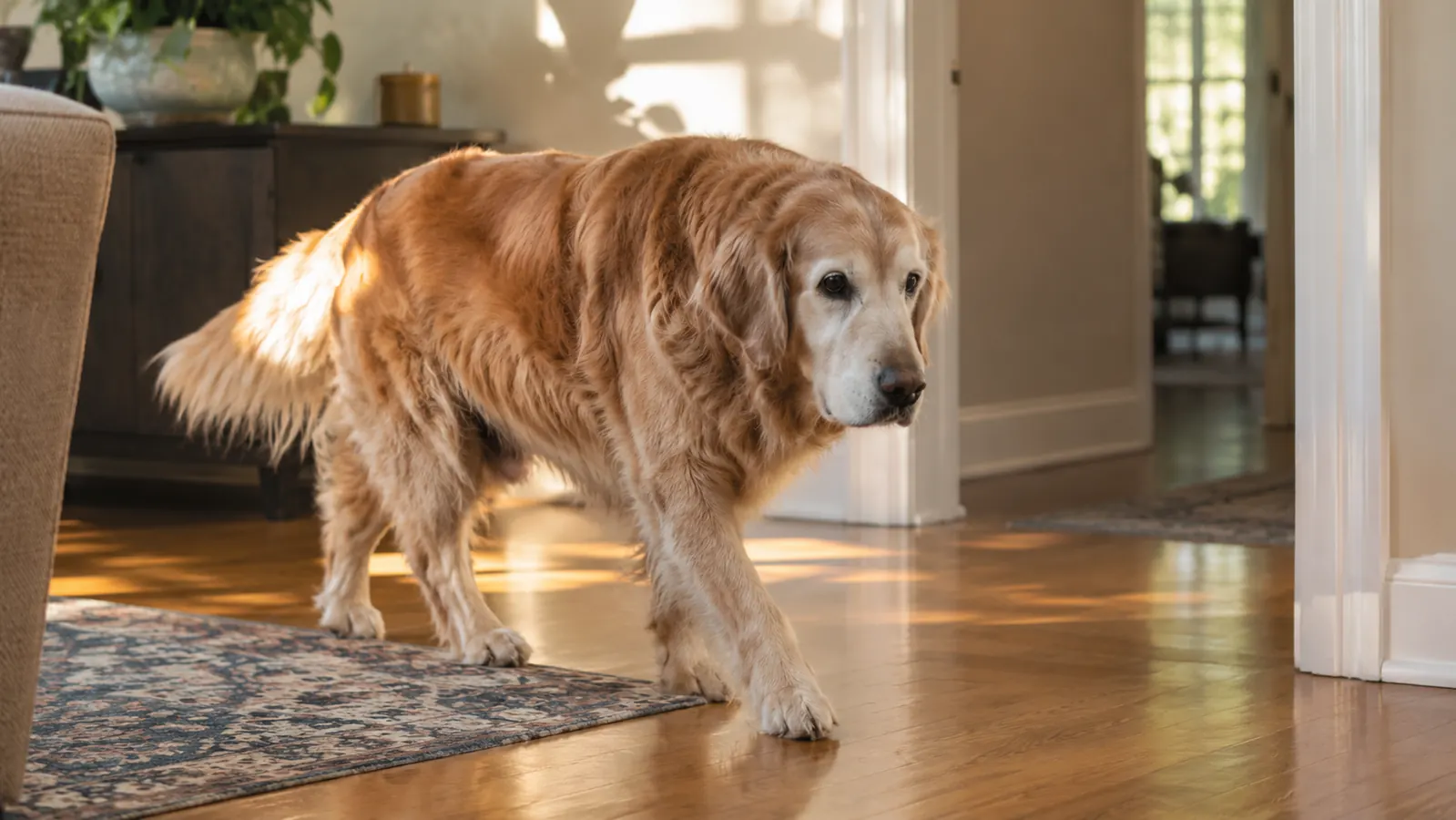
Watch how the dog moves with the socks on. Moose walks more slowly at first, then picks up his normal pace once he trusts the grip. If your dog walks worse, bunny-hops, or refuses to move, the socks are not fitted right or the dog is not ready. Take them off and try again later. The goal is a steadier dog, not a dog in socks.
Five months in, the back socks still twist when Moose is tired. I straighten them, he keeps walking. That is the trade, and it is a better one than a fall on the kitchen tile.
Step 5: Check the socks, the paws and the floor
Check the socks every few days. Look at the grip section, the seams and the closure. The material is cotton and nylon, and the care instructions say machine wash. I wash them in a mesh bag on a normal cycle and let them air dry. I do not put them in the dryer because heat is hard on the closure and the grip. That is my habit, not a label instruction. If the grip is packed with hair or grit, rinse it off. A slick grip is no better than a bare paw.
Expect some twisting. Moose is 82 pounds and he drags his back feet when he is tired. The back socks twist after a while, and I straighten them. The DOK grip is built to give traction even when the sock twists, which is the reason I kept using them after the first week. That does not mean a twisted sock is fine forever. Straighten it when you see it, and check the paw for redness or rubbing. If the skin is irritated, stop using them and call your vet.
Five months in, the socks are not pretty. They have been washed, stretched and retrieved from under the couch. The closure still holds. Moose still tolerates them. That is a fair result for a floor tool, and I do not expect them to last forever. When the grip goes smooth, I will replace them. That is the whole maintenance plan.
What Else Helps
Everything that helps a senior dog on slick floors works better together. The socks are one layer. The vet's advice about keeping Moose lean and moving is the base. A lift harness helps on the two back-porch steps and on bad mornings, but it is not a floor grip. The orthopedic bed gives him a softer place to get up from, and the ramp gets him into the truck without a jump. None of those replace the socks, and the socks do not replace any of them. If your dog is dragging a paw, knuckling over, or seems painful, that is a vet conversation, not a sock problem.
I also keep Moose's nails short and the hair between his pads trimmed. That is not a DOK feature. It is basic floor grip. A dog with long nails walks on the nails and loses contact with the floor. The socks sit over the paw, so a long nail can push the sock out of place. Trim nails, check the socks, and keep the path clear. That is most of the work.
Who This Is For
This routine is for the owner of an older dog who is still walking but losing confidence on hardwood, tile or laminate. The dog can stand, go out and get around, but turns into a shuffle on smooth floors. It is also for the owner who has tried rugs and still has a slick path between rooms. It is not for a dog that cannot bear weight, drags a limb or has sudden weakness. That dog needs a vet before any sock.
It is also not for a dog that will not tolerate anything on its feet. Some dogs hate socks, and no amount of treats will change that. If your dog fights them, ask your vet about a harness, a sling or a floor plan that avoids the slick areas. The socks are a tool, not a test of your dog's character.
A steadier path from the kitchen to the living room
Start with the Large fit for paws 2.5 to 2.8 inches, then take the first week slow. Moose still wears his five months in.
Amazon Check the DOK TigerToes on Amazon →